2012 PREVIEW
Rhizomes
New York (July - Aug)
Berlin (Sept - Oct)
Tokyo (Nov)
This touring exhibition is a collection of rhizomatic (non-linear) installations made up of paintings, drawings, water colours and video animations produced while living on the far north coast of NSW, Australia.
The show features Pandanus palms and mangroves. As with all rhizomes there is not specific start or end point with each of these organisms or desiring machines. Each grows out in all directions as time passes – rather like nodes of the internet. Both mangroves and pandanus palms exist in the littoral liminal (in-between zone) between sea and land.
The site of production is my childhood country – the coastal village of New Brighton I grew up in – full of memories that also return like postcard images from the past. I arrange these memories in my mind, then onto canvas or paper, trying to piece together events, experiences, places from the last half a century. The result is a body of 'work' that concerns the present.
A selected preview pop up exhibition will be on show at Billinudgel (just north of Byron Bay NSW) for one night only on Friday May 18th 6-8pm.
The main exhibition will travel to the USA in July - August. During September-October a pop up exhibition will be mounted in Berlin (venue to br confirmed).
USA
Donna Compton Gallery in association with Gallery Paquette
July 6 - August 12, 2012
more info
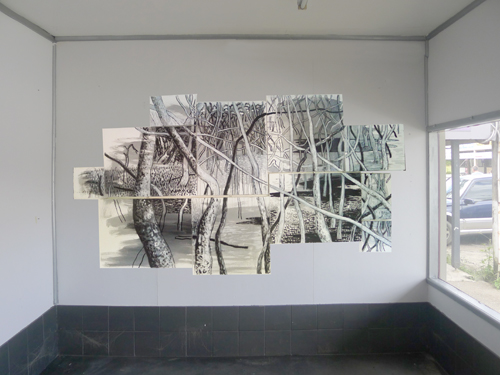
Mangrove Rhizome No 1,
oil on canvas, 120 x 220cm, 2012
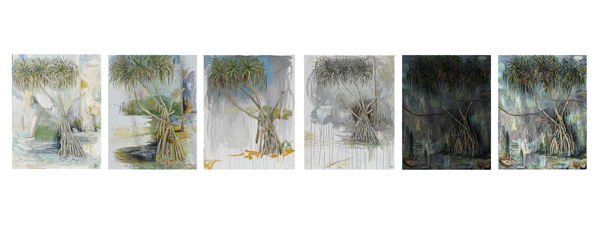
Pandanus Palm - Memory 1 - 6,
oil on canvas, 120 x 540cm, 2012
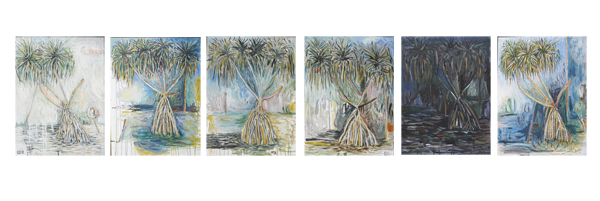
Pandanus Palm - Memory 7 - 12,
oil on canvas, 60 x 270cm, 2012
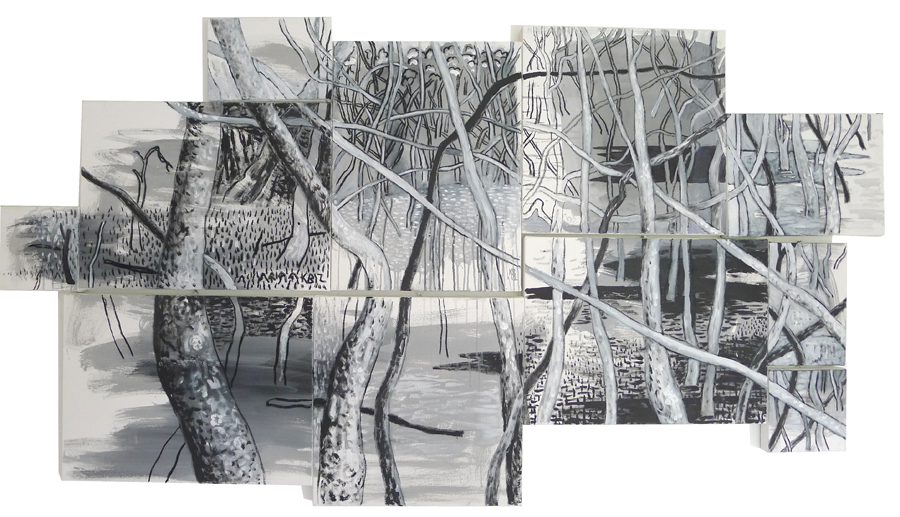
Mangrove Rhizome No1,
acrylic and charcoal on canvas, 120 x 220cm, 2012
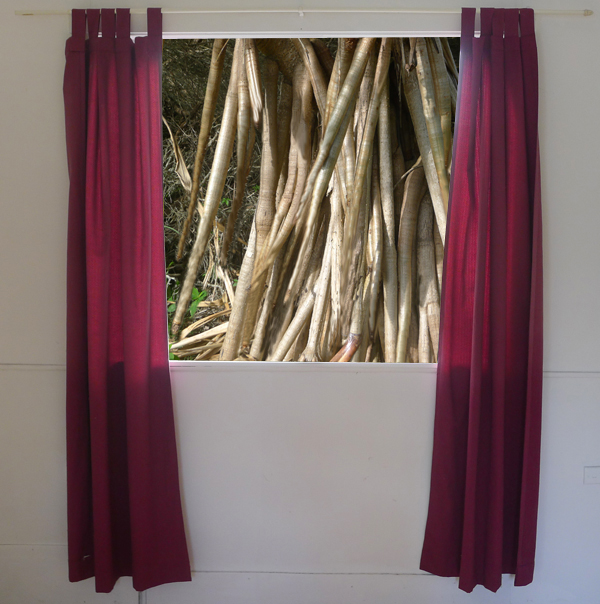
Pandanus - Liminal Vision No 1, digital video animation (5mins loop), curtains, dimensions variable, 2012
Component works or nodes
Pandanus Rhizome No1
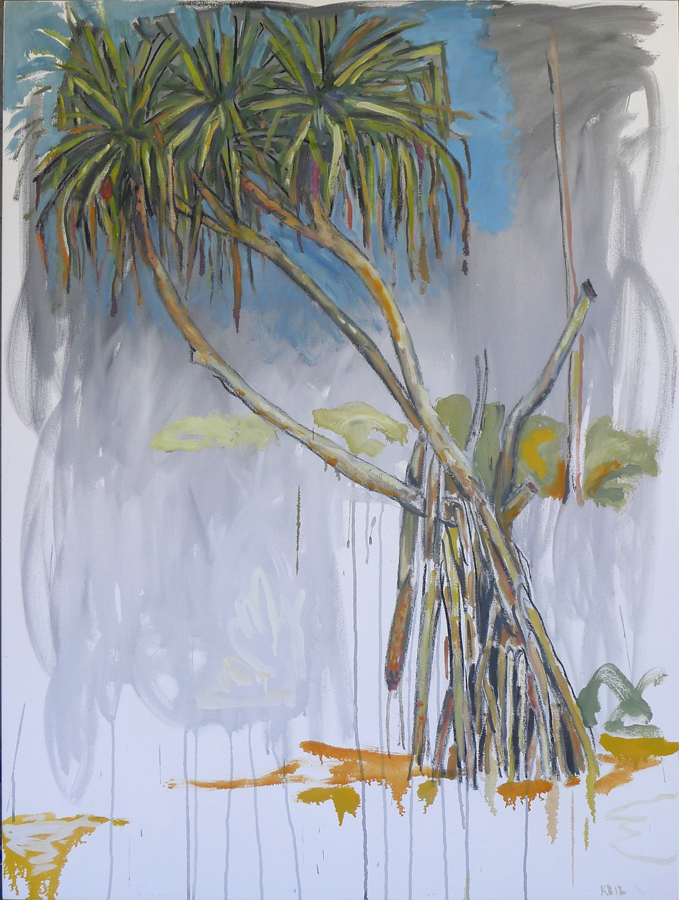
Pandanus - Memory No1, oil on canvas,
90 x 120cm, 2012
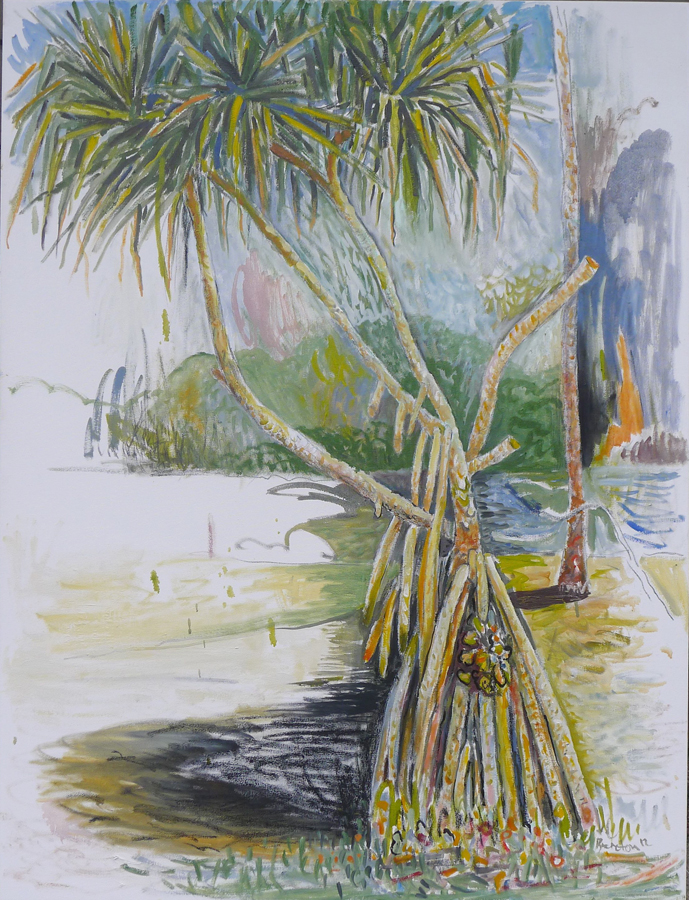
Pandanus - Memory No
2, oil on canvas,
90 x 120cm, 2012
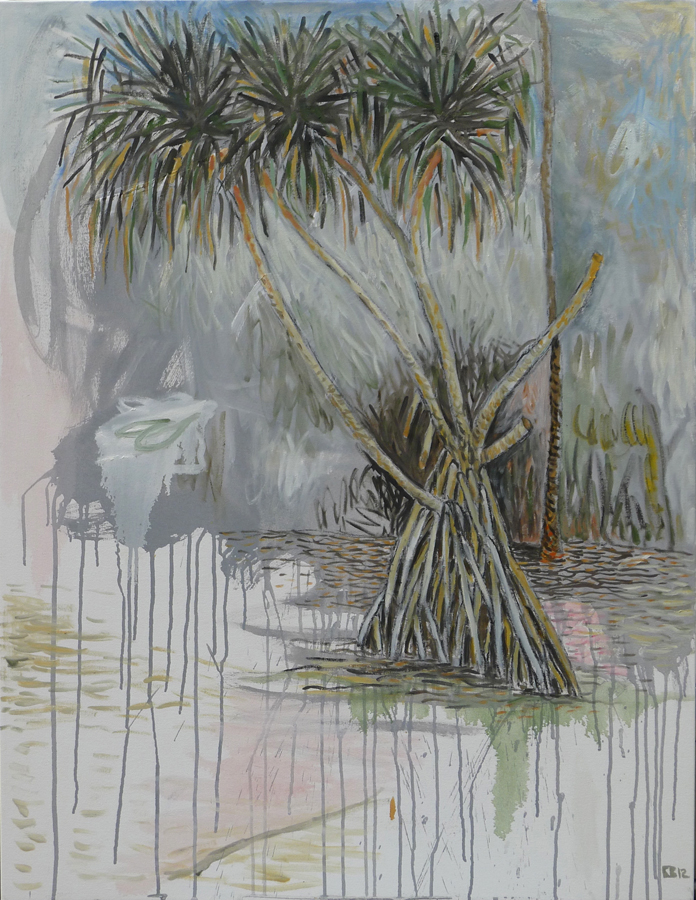
Pandanus - Memory No3, oil on canvas,
90 x 120cm, 2012
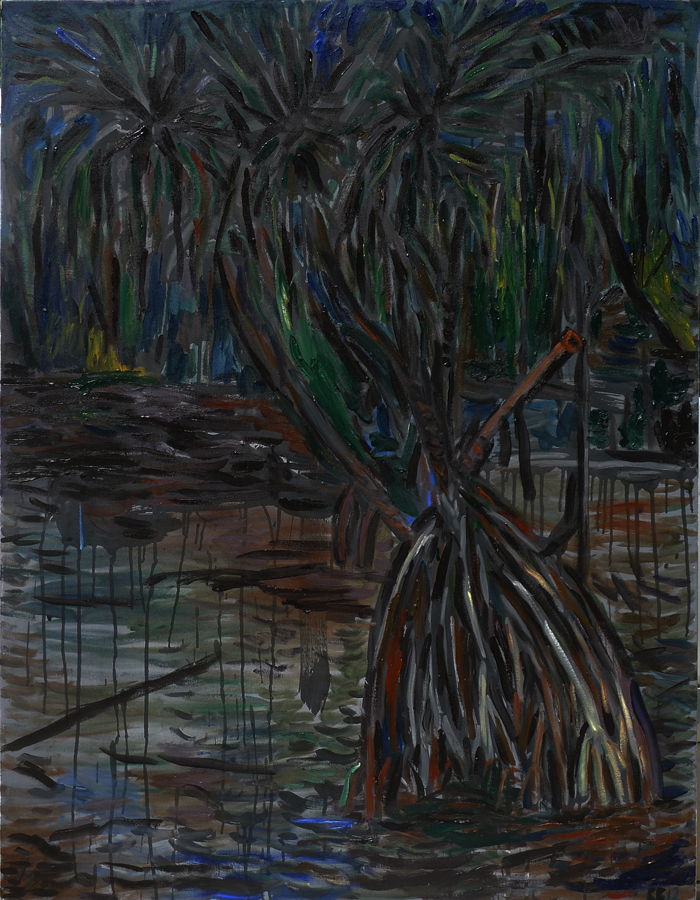
Pandanus - Memory No4, oil on canvas,
90 x 120cm, 2012
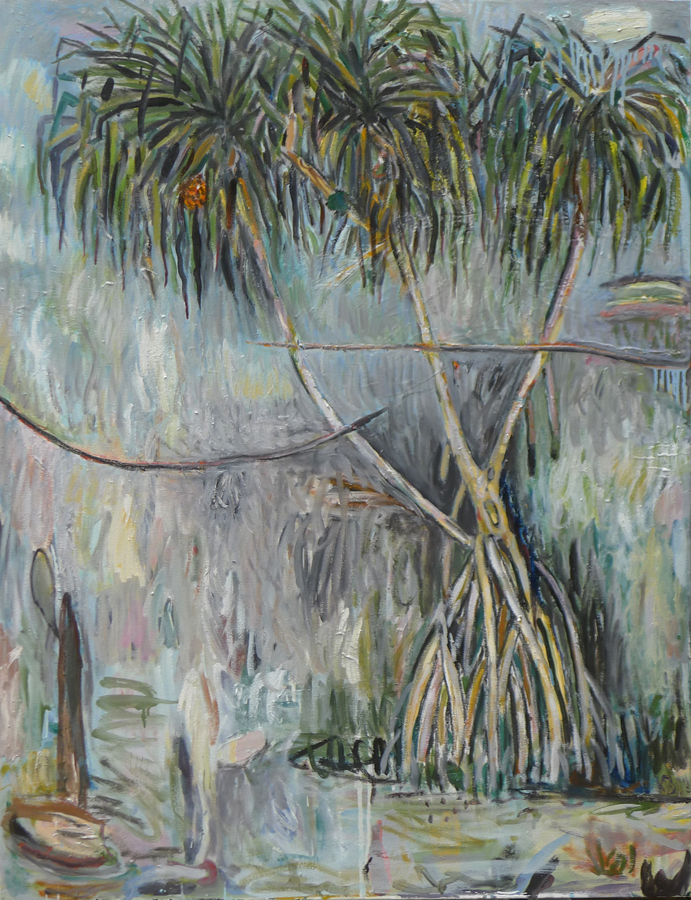
Pandanus - Memory No5, oil on canvas,
90 x 120cm, 2012
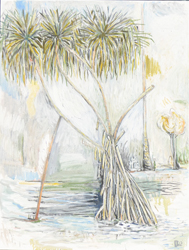
Pandanus - Memory No6, oil on canvas,
90 x 120cm, 2012
Pandanus Rhizome No2
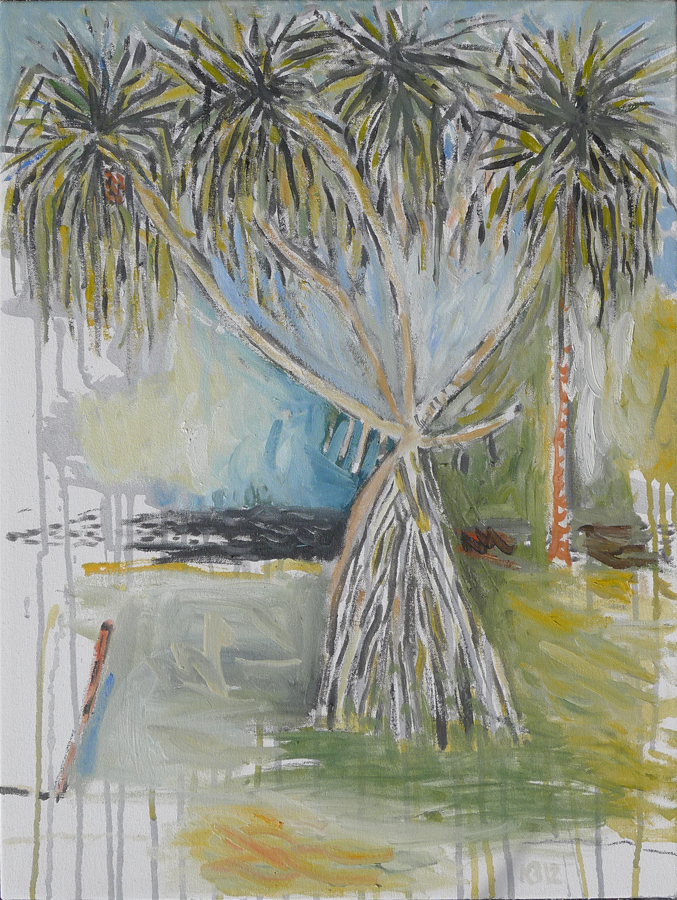
Pandanus - Memory No7, oil on canvas,
45 x 60cm, 2012
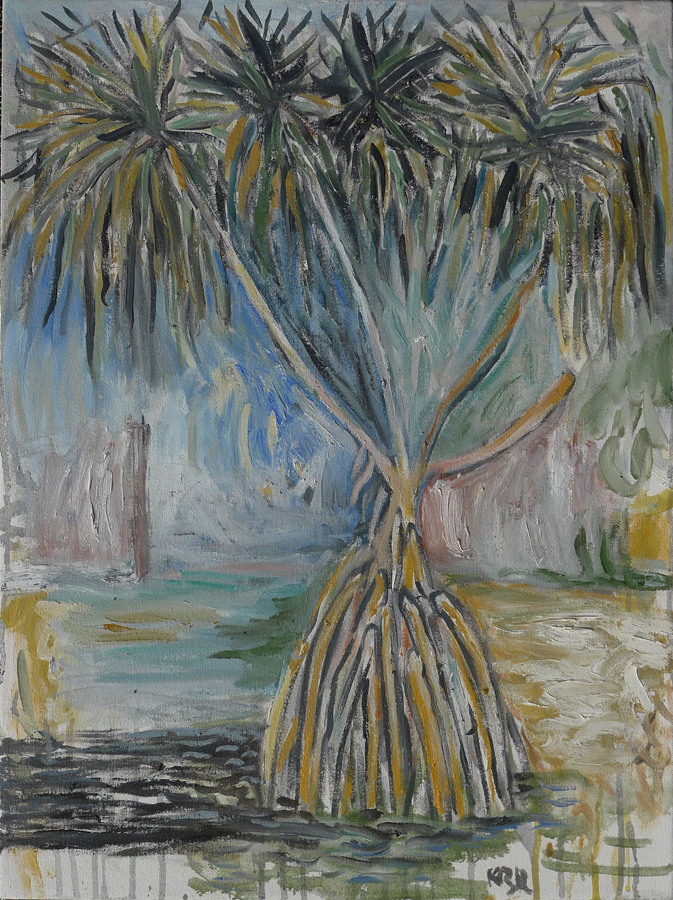
Pandanus - Memory No8, oil on canvas,
45 x 60cm, 2012
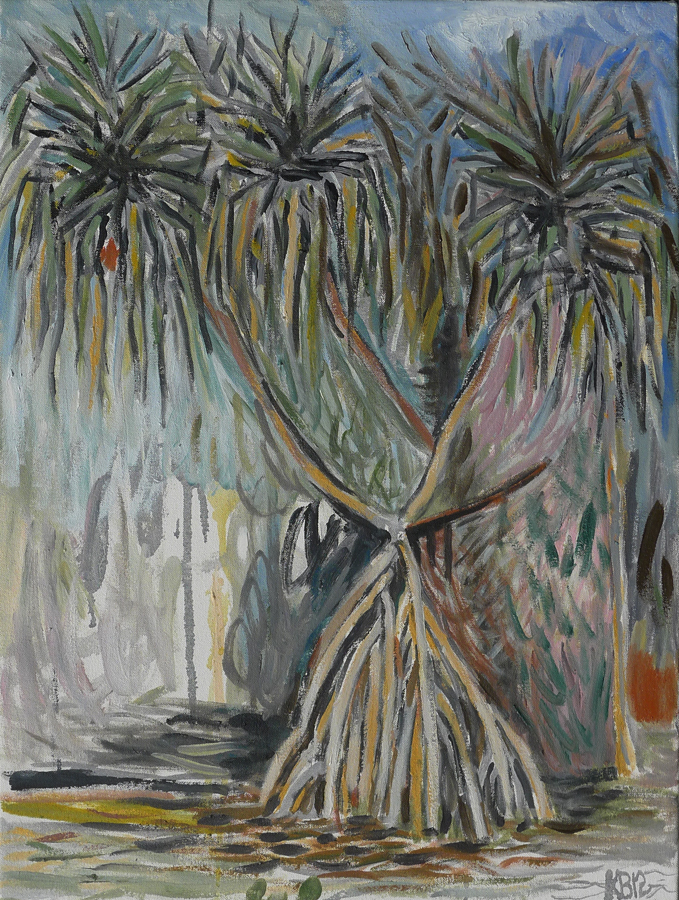
Pandanus - Memory No9, oil on canvas,
45 x 60cm, 2012
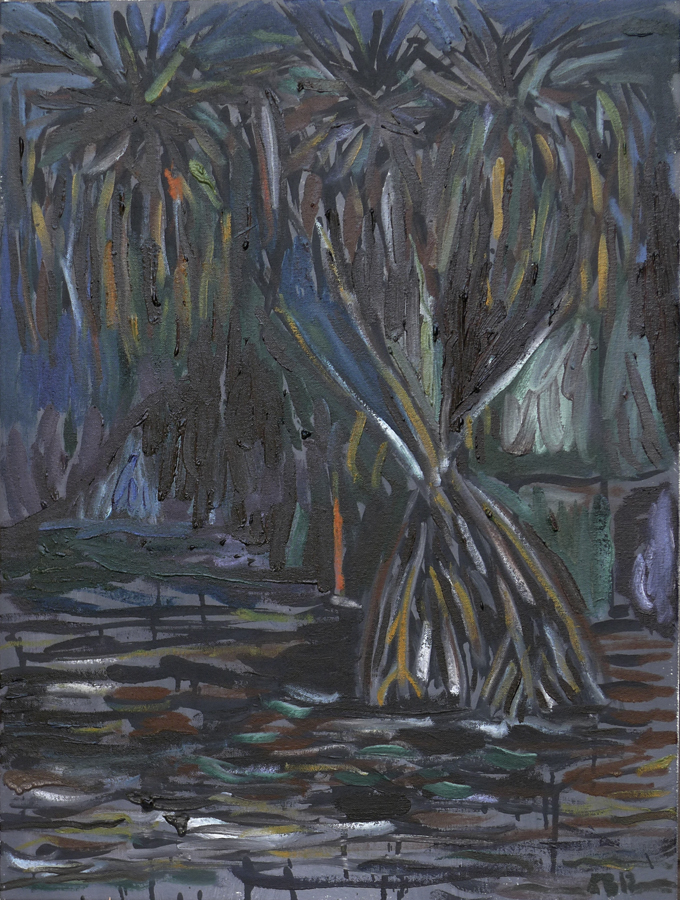
Pandanus - Memory No10, oil on canvas,
45 x 60cm, 2012
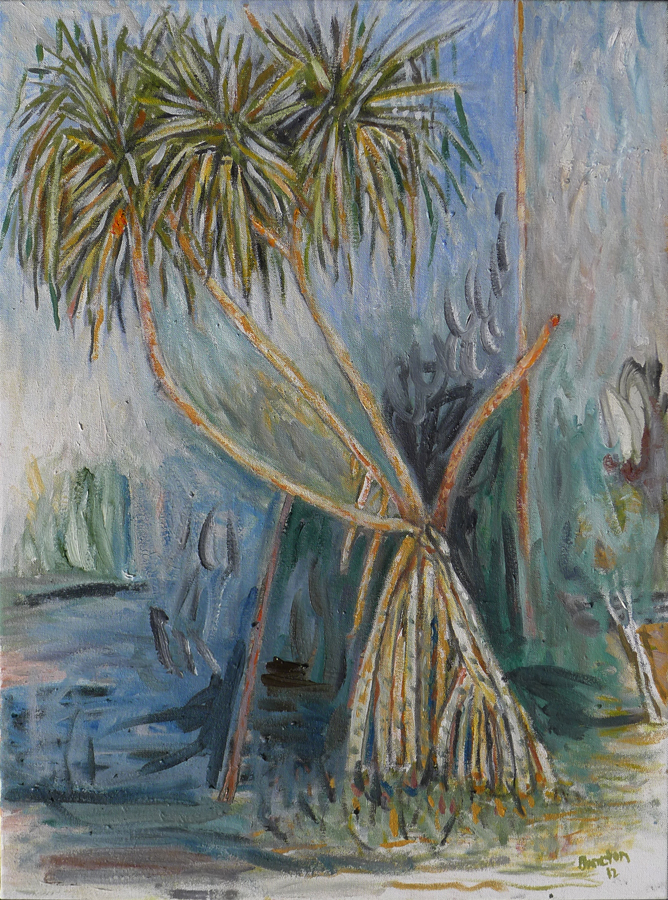
Pandanus - Memory No11, oil on canvas,
45 x 60cm, 2012

Pandanus - Memory No12, oil on canvas,
45 x 60cm, 2012
Mangrove Rhizome Nodes
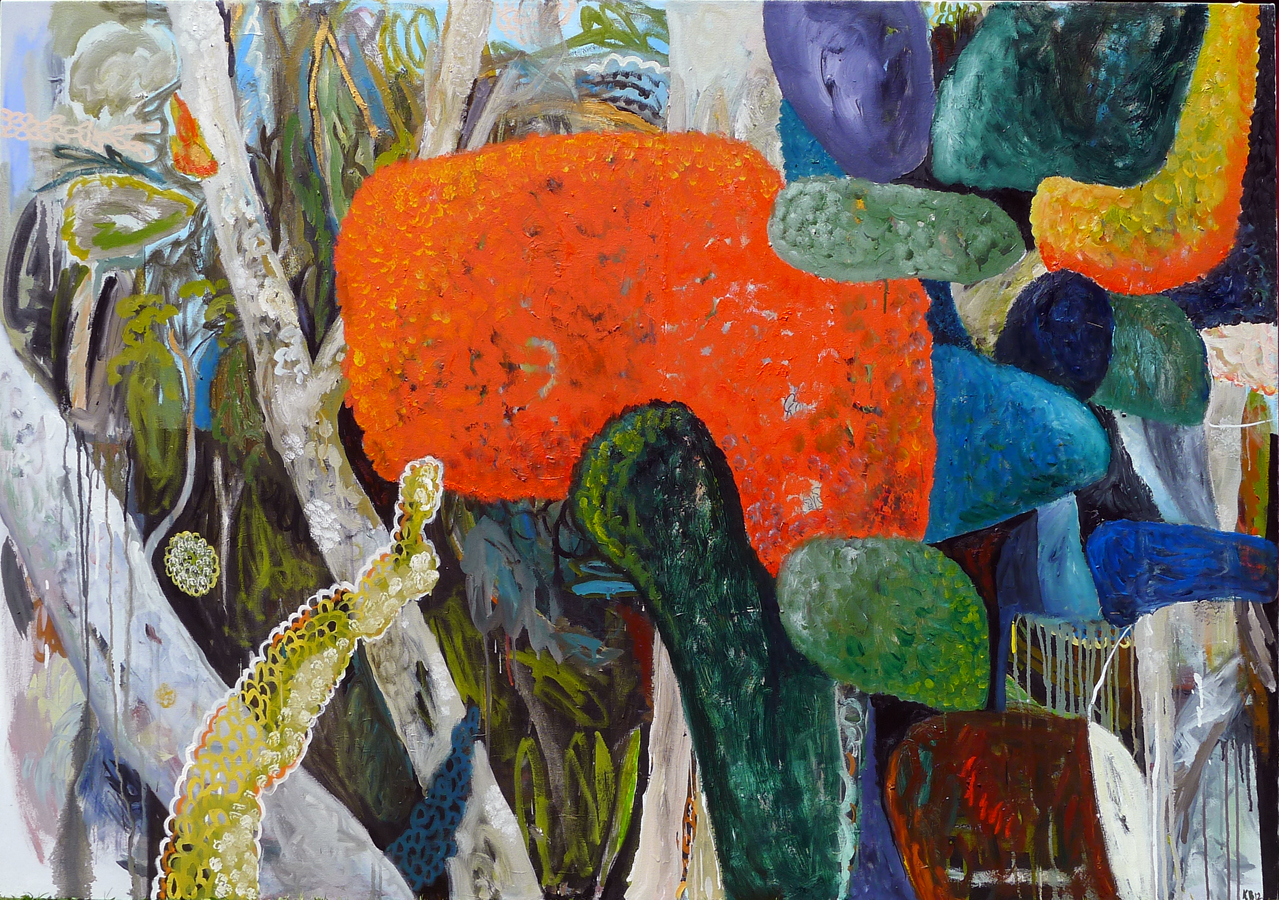
Mangroves - Memory No
1, oil on canvas, 120 x 170cm, 2012
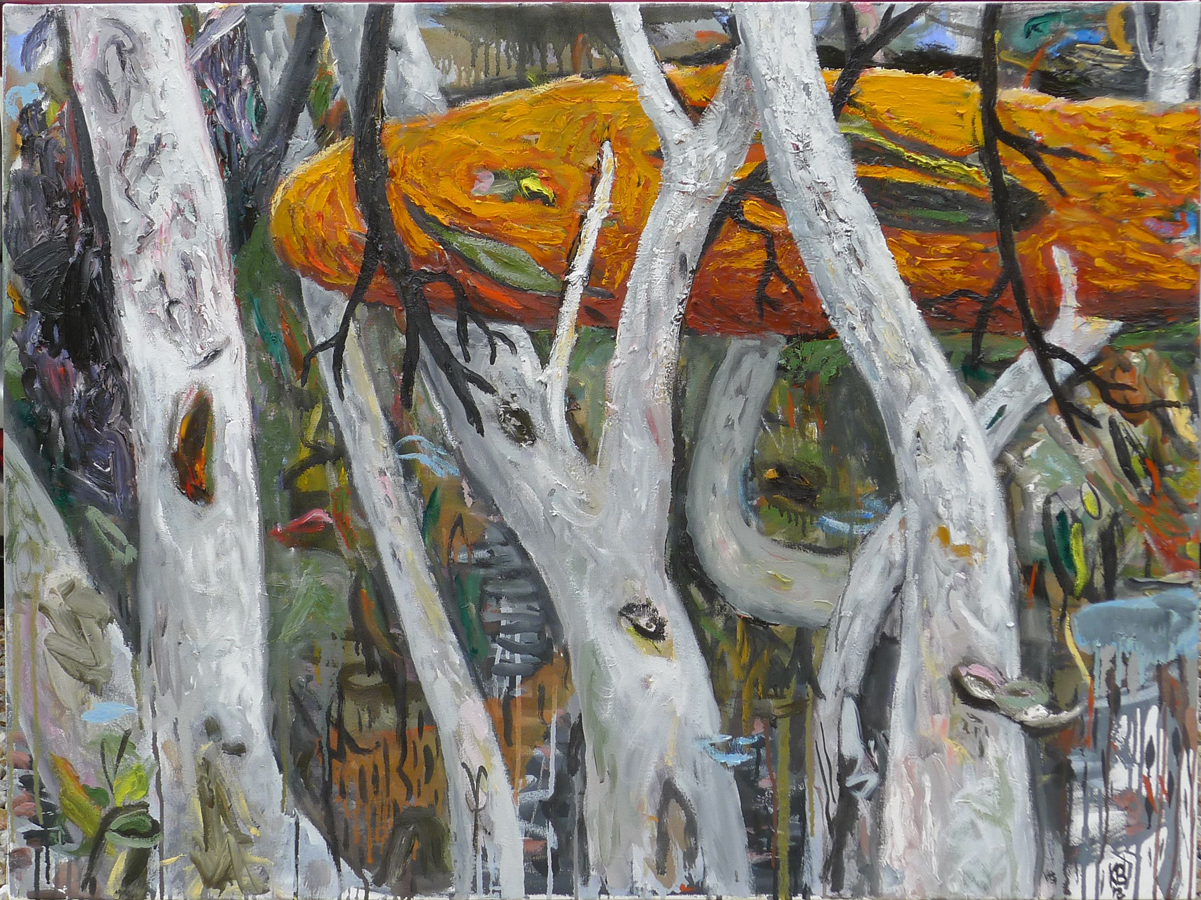
Mangroves - Memory No2, oil on canvas, 90 x 120cm, 2012
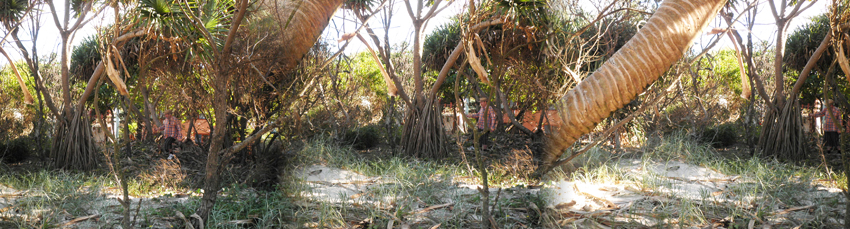
Artist statement for Gallery Paquette exhibition
Kurt Brereton – Rhizome Paintings (Pandanus and Mangroves)
This exhibition is a collection of rhizomatic (non-linear) installations made up of paintings, drawings and video animations produced while living on the far north coast of NSW, Australia during 2012.
The show features Pandanus palms and mangroves: both rhizomes that grow in the liminal zone between sea and land. For me, these rhizomatic organisms serve as practical and theoretical models for how to adapt and survive in today's environment. As with all rhizomes there is no specific start or end point with these organisms that move in a horizontal rather than vertical trajectory. Growth is determined by flows and paths of resistance and attraction – following the spread of nodes across the internet; inner city scooter traffic or swarms of bees. Pandanus palms are sometimes called "the walking trees" because they seem to move across the landscape using their long buttress roots as legs. Mangroves in turn depend on thousands of aerial roots (pneumatophores) to breathe above the high tide waterline.
Much of my childhood was spent playing inside these littoral worlds that surrounded my sub-tropical village. From within the mangrove and pandanus forests a host of personal memories that have unfolded over the last half a century. Stories that return like postcard images from the past and are built upon with each new foray. For my exhibitions I have drawn on these sensorial and narrative memories, then translated them onto canvas, paper or video. The process collages together events, experiences and places into images, sculptures and installations that map the passage of time. These "desiring organisms" continue to generate, with the passage of each tidal flow, devastating tropical storm or balmy summer's day, recordings of our past, this present as much as the trials and promises of our future.
By focusing on one Pandanus palm tree, I was able to highlight these memetic concerns – of how our memories of past signs vary from recall to recall. From this perspective, there is no singular take on history. Rather, our image of the way it was is always in flux, washed and eroded, overlaid and underscored by the fictions of the present. Yet, each image, although different in appearance, is in its own way just as powerful, beautiful and flawed as the last. For me, art is a means of fathoming, and at times, deepening the mysteries of life, by being directly immersed in its flows of difference. Art celebrates the diversity that culture and society can generate when and where the radical possibilities of life (difference) can be experienced.
Kurt Brereton, 2012
Artist statement for Compton Gallery exhibition
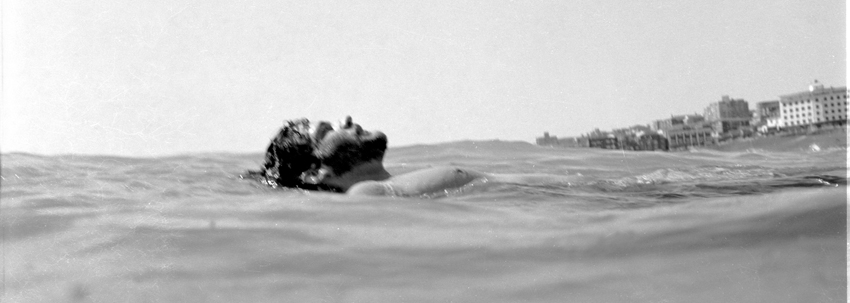
Kurt Brereton – Rhizophotography
This second solo exhibition in the USA by Australian artist brings together rarely seen highlights of Kurt Brereton’s photography from the 1970s till the present. Known primarily as a visual and digital media artist, Brereton has to date chosen to show his photographic work only in published book form. It is through the long and determined encouragement of photographic dealer Donna Compton, that we can now view these images in a larger gallery space. It is not your typical photographic exhibition by any means however.
The exhibition has been grouped into three preoccupations of Brereton spanning the last 40 years – namely; patheticism, beach and punk cultures. With the recent publication of More Is Plenty, edited by art critic Ken Bolton, we saw the full contextual extent and importance of photography to Brereton’s creative career. The complete version of his critically humorous text The Pathetic Manifesto was a highlight, as was the updated Cultural Poetics of Water. We see immediately that both essays go hand in hand with bodies of photographs, films, paintings and sculptures produced at the time of research and writing.
Brereton’s artistic exploration owes much to radical postmodern ideas of the Post-structural philosophers Deleuze and Guatarri. In particular their theory of rhizomatics and the generation of artistic “desiring machines.” Photographs, while being framed as singularities, also serve for Brereton as “image-maps” and “organotronic” phenomena that point and extend in all directions into other productions. Art is in constant state of flux for Brereton. Just as the waves of the sea constantly rewrite the pages of a beach, so Brereton’s images are constantly painted over, re-edited, revised from day to day. So we must see Brereton’s photos as textual elements or fragments that expand into films, paintings, poems or performances. Perhaps this is one of the reasons why Brereton has preferred the book to the gallery when it comes to relatively “cold media” of photography.
In the past Brereton has preferred to show his photographs as projected slide shows for selected audiences. He says that the life of a photograph lies in how light is cinematically projected through the grain of the image and immerses the viewer in its glow. The intimacy of the small scale book format is also preferred over the gallery wall. Traditionally, photos were seen inside albums, iconic lockets and wallets – something secret to be unveiled to the cherished few. Of course the other format is, by contrast, the advertising billboard. During the 1970s Brereton used to wall-paper his apartments with huge discarded billboards. Friends would enter and leave through doors cut into an enormous scene of a plane flying over the ocean or an extreme close up of a floor to ceiling face of some beautiful suntanned model frolicking on some Pacific beach. The challenge for the viewing logic of traditional white cube gallery space is to heat up the photographic viewing experience so that is can compete with the “hot media” of painting and sculpture. Hence the emergence of large rear projected light boxes and cinematic projection rooms inside galleries. The tendency is to go ever larger towards the billboard wall.
Brereton has treated the gallery space as one large performance space. We are presented with a topological environment of images, texts, graphics and objects – in other words, a performance network, including its nodes and connecting lines. The viewer is pulled in to the intimacy of details as much as impressed by the larger mise-en-scene. Rather than quickly scanning the gallery room for a few brief seconds to “get the idea” then leaving – we find ourselves engrossed in visual “footnotes”, full bleed images, private viewing micro films and bizarre museological curiosities. Without being dogmatic or prescriptive, what Brereton delivers is the all the history formats and cultural genres of experiencing the photographic image in one download Google-like search finding.
We leave the gallery space with as many questions as answers. As Brereton notes, “there is no beginning or ending to an artwork today – only interruptions.” After leaving Brereton’s last exhibition I found myself reaching for my favourite search engine to follow up what the hell a “desiring machine” was and where I could buy one as soon as possible.
Edward Ward, Sydney 2012