TAFE Teaching 2010
Advanced Diploma
502A/503A/510A Cultural Productions
(2nd Year)
Subject: FAT502A/FAPP510A/FAT503A Cultural Productions (2nd Year) Semester 2
Teacher: Kurt Brereton (0414568221)
kurt@kurtbrereton.com
www.kurtbrereton.com
OUTLINE
Class 1 (22 July) Excursion to MCA
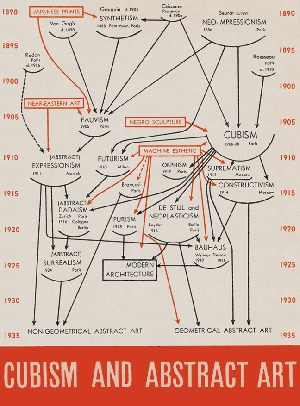
Class 2 (29 July) Art Timelines (1920 – 1960) critical feedback on your timelines
Class 3 (5 August) Your own art practice in a historical and critical context
Class 4 (12 August) Researching, thinking and writing critically about art
Class 5 (19 August) Modernism - Key historical, social, political and technological events
Class 6 (26 August) Focus - Marcel Duchamp
Class 7 (2 September) Prima Vera Excursion to MCA (meet 11am)
Class 8 (9 September) Focus - Pablo Picasso
Class 9 (16 September) Focus - Giacomo Balla
Class 10 (23 September ) Focus - Meret Oppenheim
Class 11 (14 October) Focus - Alice Neil
Class 12 (21 October) Focus - Sidney Nolan
Class13 (28 October) Focus - Albert Tucker
Class 14 (4 November) Focus - Clarice Beckett
Class 15 (11 November) Focus - Francis Bacon
Class 16 (18 November) Focus - Mark Rothko
Class 17 (25 November) Plate recognition test
Assessment tasks to be completed 2010
Semester 1
1. Timeline – 10 key social/cultural/art events identified within the timeline 1900 - 1960 that reflects your own work and explain how the timeline events and artists have influenced your own work (300-500 words total).
2. Plate Recognition (100 works from those shown in class) and supplied on the library database - see folder called PLATE TEST in KURT folder and inside Cult Prod 2nd Year)
Semester 2
3. A) Essay/report/article (1500 words) Focus on one period and artists from the timeline period.
B) Art Reviews – 3 x 500 words each based on works in the timeline that connect to your own work.
C) 6 minute oral presentation/discussion - can be on your timeline artwork and/or focus area.
D) I would like you to think creatively here and construct a timeline artwork that is reflects your own art practice. ie an object - eg see below image of the foldout book model.

Lectures
Class 2 (29 July ) Art Timelines (1920 – 1960) movements, events and artists
Links
http://www.visual-arts-cork.com/modern-art-movements.htm
http://all-art.org/history664_prehistoric_modern.html
http://daphne.palomar.edu/mhudelson/StudyGuides/20thCentEarly_WA.html
http://daphne.palomar.edu/mhudelson/StudyGuides/20thCentLate_WA.html
http://www.infoplease.com/ipea/A0106225.html
http://the-artists.org/movement/movements
http://en.wikipedia.org/wiki/20th_century_art
Patricia Bray -timeline artist
http://www.patbray7.com/index.html
For critical views on timelines (Barr etc) see http://www.edwardtufte.com/bboard/q-and-a-fetch-msg?msg_id=0000yO
Key text reference: Cartographies of Time: A History of the Timeline,
Daniel Rosenberg and Anthony Grafton; Princeton Architectural Press 2010
http://www.finebooksmagazine.com/issue/201001/review-1.phtml
A Timeline of Timelines http://www.cabinetmagazine.org/issues/13/timelines.php
Class 3 (5 August) Your own art practice in a historical and critical context
Start with a formal description of what you see/hear/feel
• What is an image/sound of?
• What is it made of?
• How big is it?
• What colours, shapes, materials are involved?
Then ask what is the significance of your creative project using the following 4 critcial and analytical approaches :
• Historical perspective (when, where and how did it happen? who wrote the history?)
• Cultural perspective (what does it mean? values and beliefs?)
• Social perspective (how is it used/who uses it?)
• Political perspective (what is it's role in terms of power?)
• Aesthetic perspective (design aspects - how and why is it designed this way?)
Links
The Fundamentals of Critical Reading and Effective Writing http://www.criticalreading.com/interpretation.htm
10 Writing Tips from the Masters http://www.pickthebrain.com/blog/art-of-writing/
STRATEGIES FOR LOOKING AT, TALKING and WRITING ABOUT ART http://www.ccds.charlotte.nc.us/green/looking_and_writing_about_art.htm
A Practical Guide to Writing About Art http://pages.towson.edu/sisaacs/creq.htm
|Writing the Art History paper http://www.dartmouth.edu/~writing/materials/student/humanities/arthistory.shtml
Class 4 (12 August) Researching, thinking and writing critically about art
Context - making sense of an artwork is helped by researching the social, historical, political and cultural forces that may have helped shape the artist's ideas - and even how he or she made the work - and how the work made sense to the audience of it's day.
No artwork was produced in a vacumn. Every artwork is a product of it's time and place and continues to change meaning through time. In other words meaning is never static. What a work means depends on the context of its exhibition, who is reading it, talking about it, buying it or selling it.
A painting can be seen as worthless and useless at the time of its production (think of Van Gogh) then become a masterpiece years later.
The value of an artwork often depends on the media and/or the critical value placed on it by historians and experts.
Links
How to Write a Response to a Work of Art
http://essay-writing.suite101.com/article.cfm/how_to_write_a_response_to_a_work_of_art
Writing About Paintings
http://people.ucalgary.ca/~rseiler/painting.htm
How to Write a Critical Analysis
http://www.ehow.com/how_2313458_write-critical-analysis.html
Critical Analysis Frameworks
http://www.ottawaartgallery.ca/education/pdf/interacting_with_art_critical_analysis_frameworks.pdf
Class 5 (19 August) Key historical, social, political and technological events
Freud - What Is the Unconscious? http://psychology.about.com/od/uindex/g/def_unconscious.htm
Freudian Art http://www.humanitiesweb.org/human.php?s=g&p=a&a=i&ID=1095
The Coming Of The Unconscious by JG Ballard http://www.jgballard.ca/non_fiction/jgb_reviews_surrealism.html
Surrealism
http://en.wikipedia.org/wiki/Surrealism
http://www.answers.com/topic/surrealism
Giorgio de Chirico http://en.wikipedia.org/wiki/Giorgio_de_Chirico
Yves Tanguy http://www.answers.com/topic/yves-tanguy
Max Ernst http://www.artchive.com/artchive/ftptoc/ernst_ext.html
Class 6 (26 August) Focus - Marcel Duchamp
Class 7 (2 September) Sydney Excursion MCA 11am
Class 8 (9 September) Focus - Pablo Picasso
Class 9 (16 September) Focus - Giacomo Balla
Class 10 (23 September ) Focus - Meret Oppenheim
Class 11 (14 October) Focus - Alice Neil
Class 12 (21 October) Focus - Sidney Nolan
Class13 (28 October) Focus - Albert Tucker
Class 14 (4 November) Focus - Clarice Beckett
Class 15 (11 November) Focus - Francis Bacon
Class 16 (18 November) Focus - Mark Rothko
http://www.artcyclopedia.com/artists/rothko_mark.html
Class 17 (25 November) Plate recognition test